
Articles | ِDr. Niknejad
INJECTABLE EXTRACELLULAR MATRIX MICROPARTICLES FOR REGENERATIVE AND BIOCOMPATIBLE SOFT TISSUE AUGMENTATION

writer :
-

author :
-
.png)
Translator :
-

year of publication :

Publishers :
-
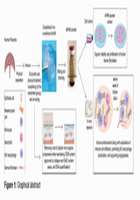
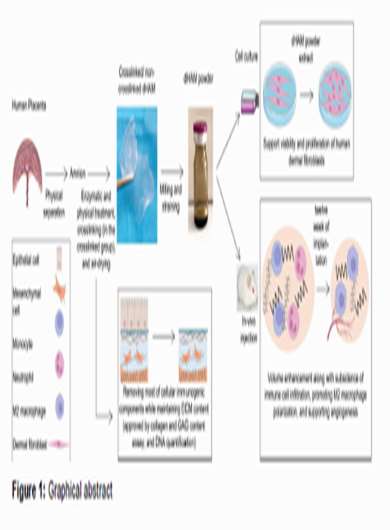
Decellularized extracellular matrices (DEMs) have been widely investigated as promising biomaterials for soft tissue augmentation. In contrast, the use of decellularized human amniotic membrane (dHAM) represents a novel approach within this field, offering unique potential for clinical application. The objective of this study is to de-velop an “off-the-shelf” bioactive soft tissue filler from crosslinked and non-crosslinked dHAM in the injectable microparticle formulation. We used physical and enzymatic processes for decellularization and milling for fabri-cating the injectable matrix. The decellularization, crosslinking and detoxification protocol removed immunogenic cellular components, preserved collagen and glycosaminoglycan content, and reduced residual crosslinker to sub-cytotoxic levels. Consequently, both crosslinked and non-crosslinked powder extractions promoted cell viability and proliferation and did not affect cell migration in culture. Moreover, the crosslinked powder showed higher stability upon in vitro enzymatic degradation and prolonged volume retention in the subcutaneous guinea pig model. Histopathologic evaluation of the implants showed that immune cell infiltration markedly resolved over the 12-week study period. Moreover, immunohistochemistry staining for CD68 and CD163 macrophage markers indicated the abundance of CD163-positive cells, commonly associated with an anti-inflammatory or M2-like phenotype. Staining for CD31 endothelial cell marker demonstrated the formation of blood vessels with intralu-minal RBCs and endothelial cell lining within the implants, which is indicative of neovascularization. Therefore, dHAM demonstrated long-term volume retention, reduced immune cell infiltration, and was associated with a CD163-positive macrophage phenotype and evidence of vascularization in the animal model. This study suggests dHAM as a readily deliverable biomaterial and a promising candidate to address clinical translational needs for soft tissue reconstruction.

the latest
Articles
- ِDr. NiknejadRecent advances on anti-scarring properties of amniotic membrane: emerging strategies and clinical potentials in regenerative me